
College football schedules have a way of becoming family calendars. Once a child goes away to school, Saturdays start getting blocked off months in advance. Parents learn the rivalry games, figure out which weekends are worth a flight, and suddenly have opinions about teams they barely followed a few years earlier.
That’s become part of the fall routine for William Timlen, a CPA in New Canaan, Connecticut, whose younger son attends the University of Miami. And there’s plenty for Miami families to follow this year. The Hurricanes open the 2026 season at Stanford on September 4 after a 13-3 season that took them all the way to the College Football Playoff National Championship Game.
For Timlen and other parents watching from hundreds of miles away, the schedule is more than a list of games. It shapes visits, travel, and the weekends when everyone knows where everyone else will be. He has written about the way sending a child to college can reshape a family’s fall, and this year Miami is giving its families a particularly interesting season to plan around.
Miami Isn’t Starting From Scratch
The Hurricanes enter 2026 ranked No. 7 in both the preseason AP Top 25 and the Coaches Poll, their highest preseason AP ranking since 2004. They were also picked to finish first in the 17-team ACC.
After last season, the expectations aren’t difficult to understand.
Miami entered the College Football Playoff as the No. 10 seed and proceeded to beat Texas A&M 10-3, Ohio State 24-14, and Ole Miss 31-27. The run finally ended at Hard Rock Stadium, where Indiana beat Miami 27-21 in the national championship game.
That leaves the Hurricanes in an interesting position this fall. They’re coming off their best season in years, but they’re also trying to prove it wasn’t a one-year run.
Mario Cristobal enters his fifth season as head coach with Miami chasing its third straight season with at least 10 wins. The program hasn’t put together a stretch like that since the early 2000s, which helps explain why a No. 7 preseason ranking feels less like hype than it might have a few years ago.
A New Quarterback Walks Into a Very Good Situation
The biggest change comes at quarterback, where Carson Beck’s departure for the NFL created an obvious hole.
Miami filled it through the transfer portal with Darian Mensah, who arrives from Duke after leading the ACC with 3,973 passing yards and throwing 34 touchdowns against six interceptions. He completed 67 percent of his passes, helped Duke win the ACC championship, and enters the season as the conference’s Preseason Player of the Year.
He won’t have to build an offense from nothing.
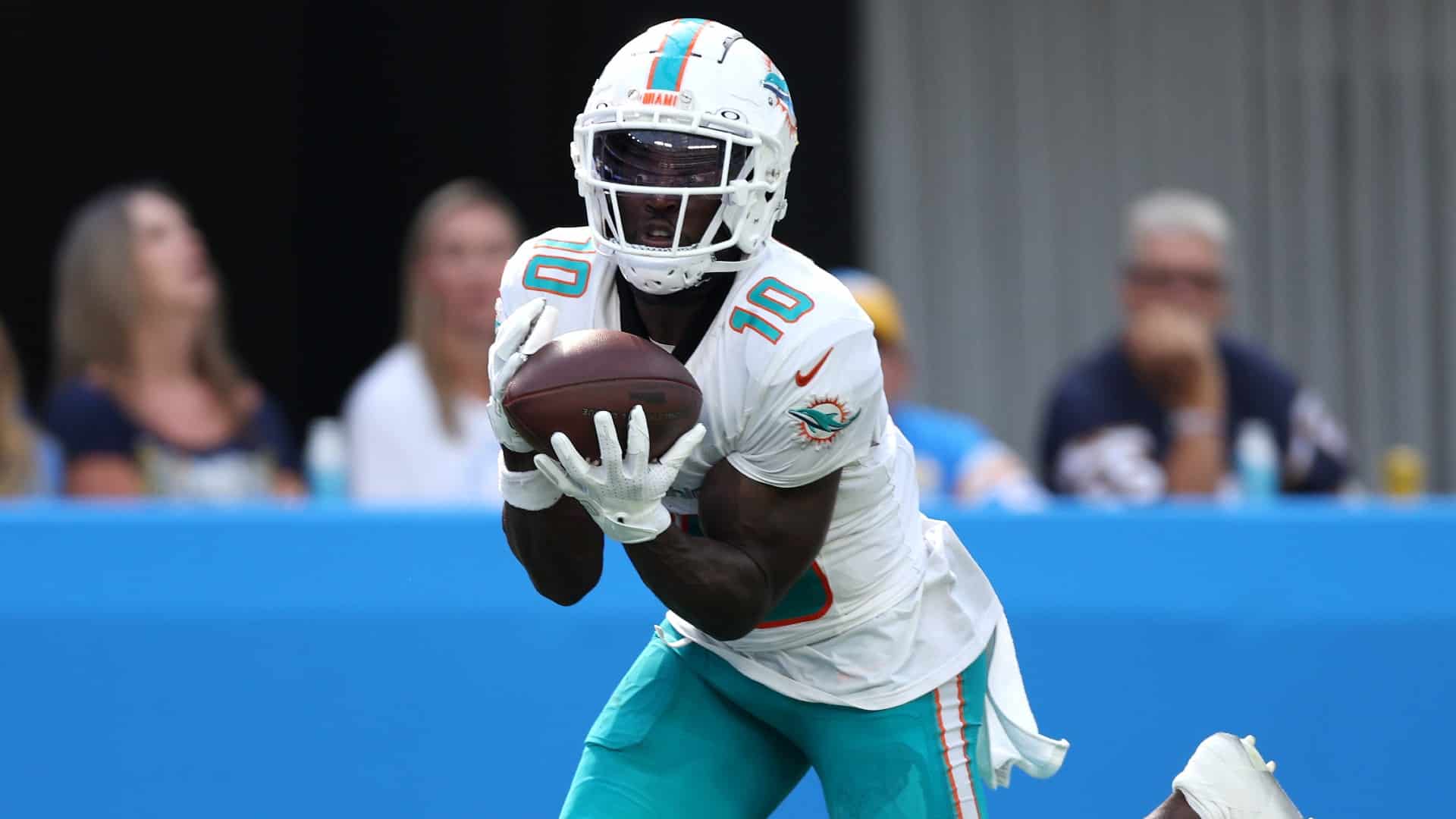
Wide receiver Malachi Toney is back after leading the nation with 109 receptions as a freshman. Running back Mark Fletcher Jr. chose to return for his senior year with 1,978 career rushing yards already behind him, including 172 in Miami’s playoff win over Texas A&M. Mensah will also see a familiar face in Cooper Barkate, who followed him from Duke, while South Carolina transfer Vandrevius Jacobs gives Miami another option in an already deep receiver group.
The bigger adjustment will happen up front.
Miami lost both starting tackles, including All-American Francis Mauigoa. Guard Samson Okunlola gives the line an experienced piece to build around, but the new tackles will have to settle in quickly. Mensah has already shown what he can do when an offense gives him time. September should tell Miami a lot about how often he’ll get it.
The Defense Has More to Replace
Miami’s defense was one of the biggest reasons the Hurricanes reached the championship game last season.
In Corey Hetherman’s first year as defensive coordinator, Miami finished fifth nationally in scoring defense, sixth against the run, 12th in total defense, and fourth in sacks. The Hurricanes led the ACC in all four categories, and Hetherman finished the season as a finalist for the Broyles Award.
Doing it again won’t be as simple as running back the same group.
Rueben Bain Jr., the 2025 ACC Defensive Player of the Year, is gone. So are Akheem Mesidor, Wesley Bissainthe, Keionte Scott, and Jakobe Thomas. That’s a lot of experience and production to replace, particularly in the pass rush.
Miami will look to Marquise Lightfoot, Armondo Blount, and Missouri transfer Damon Wilson II to help fill the hole on the edge. Inside, senior Ahmad Moten Sr. returns after recording 31 tackles, nine tackles for loss, and 4.5 sacks last season, with Justin Scott alongside him.
The defense doesn’t necessarily have to reproduce every number from 2025. It does need to keep Miami from asking a new quarterback and a changing offensive line to win shootouts every week.
How the Schedule Sets Up
Miami has seven home games and five road games in 2026:
- 4 at Stanford
- 10 vs. Florida A&M
- 18 at Wake Forest
- 26 vs. Central Michigan
- 3 at Clemson
- 10 open date
- 17 vs. Florida State
- 24 vs. Pittsburgh
- 31 at North Carolina
- 7 at Notre Dame
- 14 vs. Duke
- 20 vs. Virginia Tech
- 28 vs. Boston College
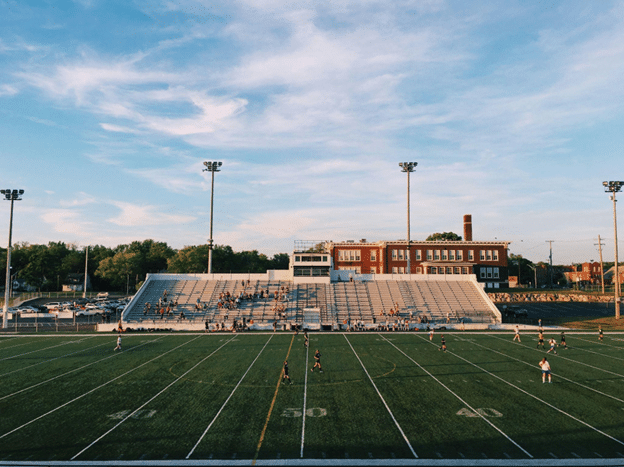
For parents planning fall visits around the college football schedule, the second half is particularly convenient. Four of Miami’s final five games are at Hard Rock Stadium, with Notre Dame on November 7 the only road trip during that stretch.
For Timlen and other Miami parents living in the Northeast, that Notre Dame game also offers one of the more manageable opportunities to see the Hurricanes without making the trip all the way to South Florida.
Clemson, Florida State, and Notre Dame Stand Out
The October 3 trip to Clemson should offer the first serious look at how well Miami’s new pieces have settled in.
By then, Mensah will have four games in the offense, but only one will have been a true road game. Clemson isn’t an especially forgiving place to find out whether a rebuilt offensive line is ready for a major conference opponent.
Then comes Florida State.
Miami gets an open week between Clemson and the October 17 rivalry game, and the Hurricanes get Florida State at home. Rivalry games have a habit of ignoring whatever the standings say, so having an extra week to prepare certainly won’t hurt.
Notre Dame on November 7 may carry the biggest postseason implications. The Irish enter the year ranked ahead of Miami, and by early November the playoff picture should be taking shape. A road win there could strengthen Miami’s position considerably. A loss wouldn’t necessarily end the Hurricanes’ playoff hopes, but it could leave much less room for error over the final three weeks.
What Would Count as a Successful Season?
After reaching the national championship game, almost any step backward is going to feel larger than it really is.
Miami has enough returning talent to contend for the ACC and make another playoff run. Toney and Fletcher give Mensah proven playmakers, Mensah himself arrives with a conference championship already on his résumé, and Hetherman’s defense isn’t starting over even with several major departures.
There are also enough unanswered questions to make another 13-win season far from automatic.
The offensive tackles have to hold up. The defense has to replace a significant portion of its pass rush. Mensah has to make the transition into a new offense while playing under expectations that will be considerably higher than the ones he faced at Duke.
Ten or 11 wins would put Miami firmly in the conference and playoff conversation. If the new offensive line settles quickly and the defense finds another dependable pass rush, the Hurricanes have the pieces for something more. If those areas take longer to come together, the season could look quite different without necessarily representing a collapse.
That’s part of what makes this particular Miami season interesting. Last year showed how high the ceiling can be. This year will show whether the program can stay there.
About William Timlen
William Timlen is a certified public accountant with roughly three decades of experience in tax, accounting, and management. He is a tax partner in the real estate group at EisnerAmper in New York, where he focuses on partnership taxation and passive activity loss rules, profit-and-loss allocations, and the tax treatment of debt restructurings.
Timlen earned his Bachelor of Science in accountancy from Providence College, where he also spent four years pitching for the school’s Division I baseball program. He lives in New Canaan, Connecticut, with his family and follows college sports from both sides of the parent experience, with sons attending the University of Miami and UConn.
As a former college athlete, fall sports are familiar territory. The difference now is that the games aren’t his to play. They’re another way to stay connected to where his children are building lives of their own.